How Many Stairs at Lempuyang Temple, A Local Guide’s Honest Answer
- account_circle admin
- calendar_month 25/09/2026
- visibility 88
- comment 0 komentar
- label Lempuyang
How Many Stairs at Lempuyang Temple? A Local Guide’s Honest Answer If you are planning to visit Pura Lempuyang in Bali, one of the first questions I often hear from tourists is:
“How many steps are there at Pura Lempuyang?”
As a local guide accompanying visitors in the Lempuyang area, I understand why people ask this before arriving. The famous “Gates of Heaven” are located at the top of the temple complex, and many tourists want to know if the journey there involves a long or difficult climb.
The short answer is that there are hundreds of steps at Pura Puncak Luhur Lempuyang, though the exact number depends on which part of the temple complex you visit and where you start counting.
So, let me explain what the climb is actually like and what you can expect during your visit.
How Many Stairs at Lempuyang Temple?
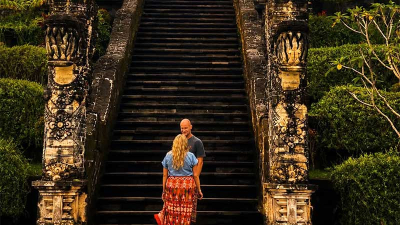
The figure most often associated with the main climb to Pura Puncak Luhur Lempuyang is around 1,700–1,800 steps.
“But that isn’t where the famous Gates of Heaven are located.”
However, I suggest treating this number as a rough estimate rather than an absolute, official count.
Why is that?
Because Lempuyang is a vast temple complex with various sections, staircases, and different paths. The count can also vary depending on your starting point and which route or temple area you include in the tally.
When tourists ask me, “Is it true there are 1,700 steps?” I usually explain that the most important thing is not to get too hung up on that number.
The climb is indeed long, but there is no need to rush.
There are spots where you can stop, rest, enjoy the surrounding forest atmosphere, and continue your journey when you are ready.
Are There Really 1,700 Steps to the Gates of Heaven?
This is where the confusion often arises.
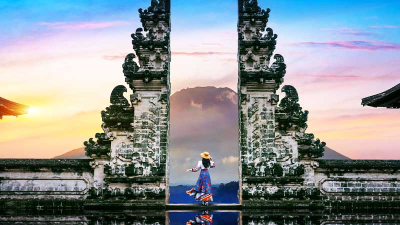
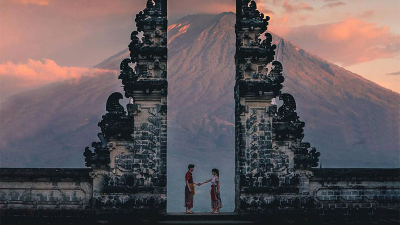
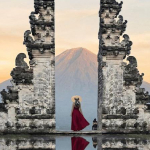
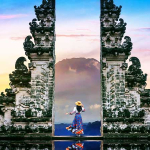
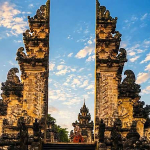
The “Gates of Heaven“—now one of Bali’s most iconic photo spots—are located within the lower temple complex, not at the summit of Mount Lempuyang.
Consequently, visitors can enjoy the experience of seeing this famous temple gate without having to complete the entire climb to the temples situated higher up on Mount Lempuyang.
It is important to understand this distinction when planning your visit. If your primary goal is to see the iconic gate and the surrounding temple area, your experience will differ significantly from that of someone undertaking a pilgrimage to the higher reaches of Mount Lempuyang.
As a guide, I always recommend asking exactly which temple areas are included in your visit, rather than simply asking how many steps there are at “Mount Lempuyang.”
What Is the Stair Climb at Pura Lempuyang Actually Like?
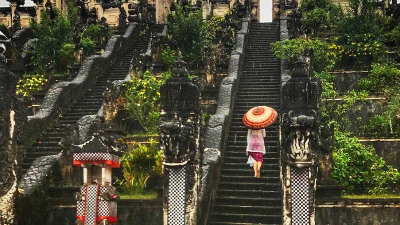
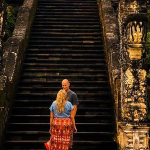
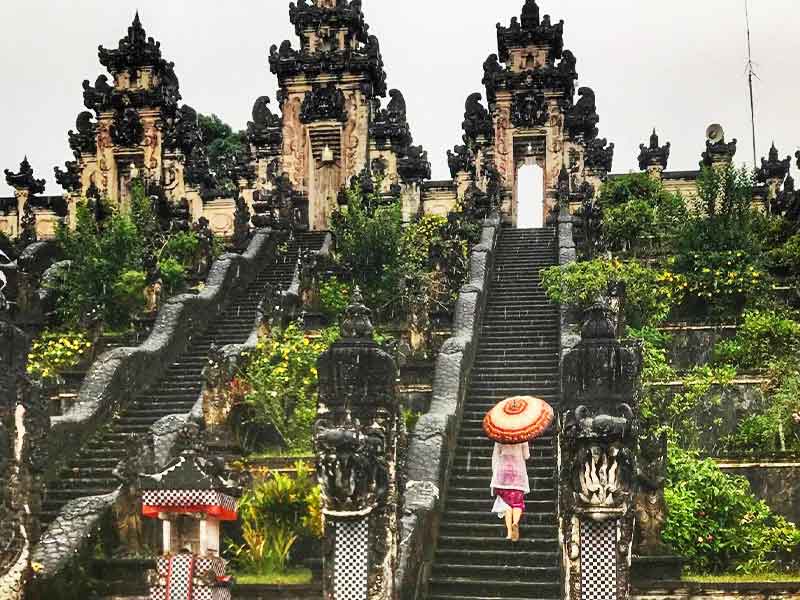
If you visit the main temple area, you will encounter a mix of stone steps, walking paths, and forest surroundings, along with sections featuring noticeable inclines.
This experience is quite different from climbing modern stairs inside a building.
You are walking through a sacred temple environment set amidst Bali’s natural landscape.
The atmosphere can be peaceful, especially as you move away from the more crowded areas.
Troops of monkeys also inhabit parts of the Lempuyang complex, so visitors should heed local advice and avoid carrying food openly.
The Initial Section
The start of the journey may feel relatively easy.
This is the point where I usually tell visitors:
“Don’t walk too fast at the beginning.”
It is easy to feel full of energy during those first few minutes, but the climb will become more exhausting if you expend too much energy right at the start.
Set a comfortable pace and save some energy for later.
The Middle Section
As you continue your journey, the climb up the steps may start to feel more strenuous. You might want to stop occasionally, especially if you aren’t used to walking long distances or climbing many steps.
That is perfectly natural.
There is no prize for reaching the top first.
As a guide, I prefer guests to enjoy the surrounding scenery rather than spending the entire journey with their heads down, focused only on their next step.
The Temple Area
Once you arrive at the main temple area, the atmosphere shifts.
You begin to understand why Lempuyang is considered one of Bali’s significant spiritual destinations.
The traditional temple architecture, the mountain setting, the forest, and the cooler air create an experience vastly different from visiting ordinary tourist attractions.
How Long Does It Take to Climb Lempuyang Temple?
There is no single time that applies to everyone.
Your walking time depends on:
- Your fitness level
- Your walking pace
- Weather conditions
- How frequently you stop
- Crowd levels
- Which section of the temple you visit
For a visitor who is reasonably comfortable walking, the climb can be manageable when taken slowly.
For older travelers, families with young children, or anyone who does not regularly climb stairs, I recommend allowing extra time.
Do not plan your Lempuyang visit as if you need to complete the stairs as quickly as possible.
Give yourself enough time to walk comfortably and enjoy the temple.
Is Lempuyang Temple Difficult to Visit?
I would describe it as physically demanding rather than technically difficult.
You do not need climbing experience.
There are no ropes or special climbing equipment involved.
The main challenge is simply the amount of walking and the number of stairs.
For many travelers, the most difficult part is not any individual staircase. It is the cumulative effect of walking uphill for an extended period.
If you are reasonably active and comfortable walking for a longer period, you can prepare for the visit by doing regular walking or stair exercises before your Bali trip.
Can Older Travelers Visit Lempuyang Temple?
Yes, but I recommend considering individual mobility and fitness rather than age alone.
I have guided travelers of different ages, and everyone has a different level of comfort with stairs.
If you are an older traveler, take your time.
Stop when necessary.
Stay hydrated.
Wear comfortable footwear.
And don’t feel pressured to match the pace of younger travelers.
If you have a mobility limitation or a medical condition that makes prolonged stair climbing difficult, it is sensible to discuss the physical requirements with your travel companion, guide, or tour operator before visiting.
What Should You Wear to Lempuyang Temple?
Remember that Lempuyang is a Balinese Hindu temple, not simply a sightseeing attraction.
Visitors should dress respectfully.
A sarong or appropriate temple attire is generally required when entering the sacred areas. Depending on the current temple rules, your tour operator or local guide can help you understand what is required.
For the walk itself, I recommend:
- Comfortable walking shoes or sandals with good grip
- Lightweight clothing
- A hat or sun protection
- Drinking water
- A small backpack
- Modest clothing suitable for entering a temple
Avoid wearing uncomfortable shoes simply because you want a particular photograph.
You will appreciate comfortable footwear much more after walking the stairs.
What Is the Best Time to Visit Lempuyang Temple?
If you want a more comfortable experience, I recommend visiting early in the day when possible.
Morning temperatures are generally more pleasant than the middle of the day, and early visits can also offer beautiful mountain light.
However, Lempuyang is a popular destination, so visitor conditions can vary significantly depending on the day and season.
Weather is also important.
Clouds and mist can sometimes cover the mountain views.
That means even if you arrive hoping for a perfectly clear view, nature ultimately decides what you will see.
As a guide, I always tell guests not to judge the entire experience only by whether the famous mountain backdrop is visible.
Lempuyang is a temple first and a photo destination second.
Read aslo : Lempuyang Temple Photo Trick: Capturing the Iconic “Gates of Heaven” Illusion
Is the Gates of Heaven Photo Worth the Stairs?
This is one of the most common questions I hear.
The famous gate provides a dramatic composition, particularly when Mount Agung is visible in the background.
But the experience is more than taking one photograph.
The journey through the temple grounds, the traditional architecture, the mountain environment, and the spiritual atmosphere are all part of visiting Lempuyang.
If you arrive only thinking about the photo, you may miss much of what makes the location special.
A Guide’s Advice for Visiting Lempuyang Bali
After accompanying travelers in the Lempuyang area, my biggest recommendation is simple:
Don’t worry too much about the exact number of stairs.
Whether someone tells you 1,700, 1,800, or another number, the experience depends more on how you approach the visit.
- Walk slowly.
- Take breaks.
- Drink water.
- Respect the temple.
- Listen to your local guide.
- And give yourself enough time.
If you are visiting primarily for the Gates of Heaven, make sure you understand which temple area your tour includes so you know exactly how much walking is involved.
Final Thoughts From a Local Guide
If you ask me “How many stairs are there at Lempuyang Temple?”, I could simply give you a number.
But as someone guiding visitors around Lempuyang, I think the more useful answer is this:
Prepare for a substantial amount of walking, but don’t let the number of stairs scare you away.
Lempuyang is not a race.
The best way to experience it is to walk at your own pace, take time to appreciate the temple and mountain environment, and respect the religious significance of the place.
And when you finally reach the temple area and look back across the landscape, you may find that the journey itself becomes one of the memorable parts of your Bali trip.