Why Is Lempuyang Temple Called Gate of Heaven?
- account_circle admin
- calendar_month 29/09/2026
- visibility 218
- comment 0 komentar
- label Lempuyang
Why Is Lempuyang Temple Called Gate of Heaven? If you have searched for places to visit in East Bali, you have probably come across the name “Lempuyang Temple Gate of Heaven”.
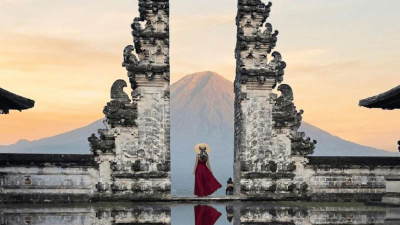
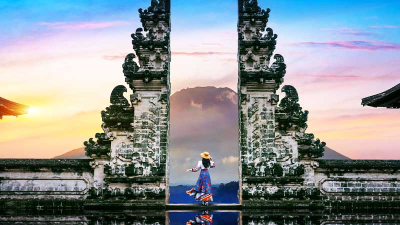
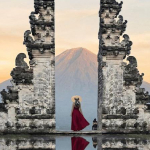
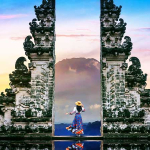
The famous image is easy to recognize: a traditional Balinese split gate standing high on the slopes of Mount Lempuyang, with the magnificent outline of Mount Agung appearing between the two sides of the gate.
But why is Lempuyang Temple called the “Gate of Heaven”?
The answer is connected to the combination of Balinese temple architecture, the sacred setting of Mount Lempuyang, the view toward Mount Agung, and the spiritual meaning associated with the temple. At the same time, it is important to understand that “Gate of Heaven” is a popular nickname, rather than the formal religious name of the temple.
Let me explain what you will actually see when you visit.
Where Is Lempuyang Temple?
Lempuyang Temple is located in Karangasem, East Bali, on the slopes of Mount Lempuyang.
The temple complex is associated with one of Bali’s important sacred mountain areas. Pura Lempuyang Luhur is recognized as one of the Sad Kahyangan Jagat, a group of important temples connected with the spiritual balance of Bali. It is also associated with the eastern direction in the Balinese concept of Catur Loka Pala.
When visitors talk about the famous Gate of Heaven photo, however, they are usually referring specifically to Pura Penataran Agung Lempuyang, located on the lower part of the Lempuyang complex rather than the highest temple at the summit.
The Famous Gate Creates the Heaven Effect
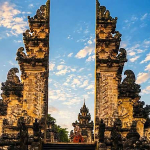
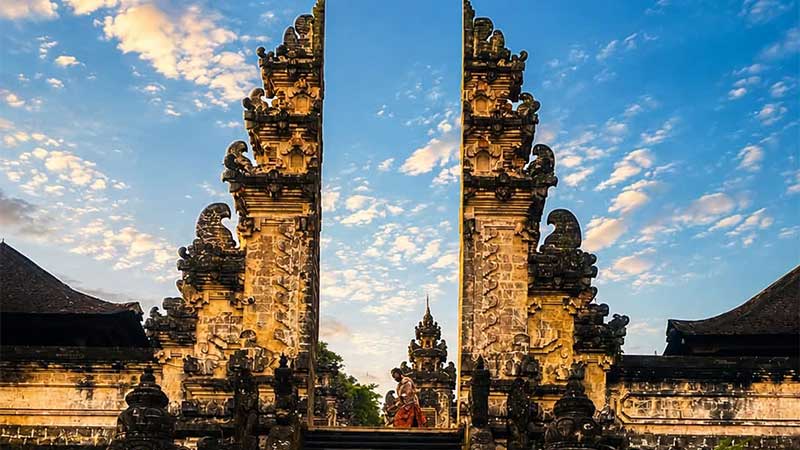
The most recognizable feature is the large split gate, traditionally known as a candi bentar.
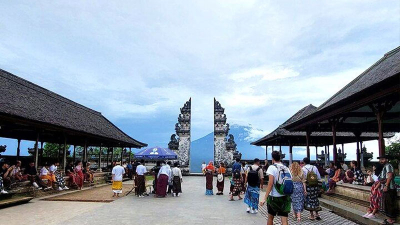
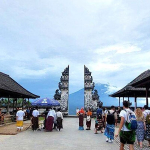
From the right position, the two sides of the gate frame the landscape behind them. On a clear day, Mount Agung rises in the distance, creating the appearance of a natural gateway opening toward the sky.
The Bali provincial tourism authority describes the lower temple’s gateway as a “gateway to heaven,” noting that Mount Agung can be seen framed between the sides of the gate when visibility is good.
This is the main reason the location became internationally associated with the name Gate of Heaven.
The architecture itself is important, but the surrounding landscape completes the picture.
Why Mount Agung Is So Important
To understand the atmosphere of Lempuyang, you also need to understand the role of mountains in Balinese Hindu culture.
Mountains are not simply geographical features in Bali. They have an important place in Balinese Hindu cosmology and are associated with sacred spaces and divine presence.
Mount Agung is particularly significant. It is the highest mountain in Bali and is closely connected with the island’s religious traditions.
That is why seeing Mount Agung through the Lempuyang gate creates more than a beautiful photograph.
For visitors, it can look like a gateway opening toward the mountain and sky. For Balinese Hindus, the surrounding landscape forms part of a much deeper sacred setting.
Is “Gate of Heaven” the Real Name?
Not exactly.
This is an important point for visitors.
“Gate of Heaven” is a popular tourism nickname, not the formal name of the temple.
The temple itself is known as Pura Penataran Agung Lempuyang, while the broader sacred complex is associated with Pura Lempuyang Luhur.
The nickname became widely used because of the visual appearance of the split gate and the spectacular Mount Agung backdrop. Tourism promotion has helped establish the phrase as one of the most recognizable descriptions of Lempuyang.
So when someone says, “I want to visit Bali’s Gate of Heaven,” they are usually talking about the famous gate at Penataran Agung Lempuyang.
The Gate Is More Than a Photo Spot
When you arrive at Lempuyang, it can be tempting to think only about the famous photograph.
As a local guide, however, I would encourage you to look beyond the photo.
This is a sacred temple complex, not simply a viewpoint.
The Lempuyang area has religious significance for Balinese Hindus, and visitors may see people coming to pray, make offerings, or take part in religious activities. The temple’s sacred character should therefore be respected throughout your visit.
The famous gate is one part of a much larger cultural and spiritual landscape.
Read aslo : Lempuyang Temple Photo Trick: Capturing the Iconic “Gates of Heaven” Illusion
What Does the Split Gate Represent?
The split gate is a characteristic element of Balinese architecture.
A candi bentar consists of two matching vertical structures separated by an open space. Similar split gates can be found at many Balinese temples and traditional compounds.
In Bali, temple architecture often expresses a transition between different spaces and levels of sacredness. Balinese temple layouts can be understood through concepts such as Tri Mandala, which divides a temple complex into different spatial zones.
Therefore, it is better not to interpret the Lempuyang gate simply as a literal “door to heaven.”
Its famous tourism nickname comes largely from the dramatic visual relationship between the gate, the sky, and Mount Agung.
Its actual cultural meaning belongs within the broader religious and architectural traditions of Bali.
Why Does the Photo Look Like a Reflection?
You may have seen photographs from Lempuyang where Mount Agung appears beautifully reflected on the ground between the gates.
This effect can make the mountain appear as though it is sitting on a mirror.
The effect became especially popular on social media and helped make Lempuyang one of Bali’s most recognizable photography locations.
The reflection is created using a reflective surface positioned in front of the camera rather than being an actual pool of water built into the temple courtyard.
However, the important part of the scene remains the same: the traditional gate, the mountain, and the surrounding temple environment.
Why Is Lempuyang Considered Sacred?
Lempuyang is not famous only because of its scenery.
The temple has an important position in Balinese Hindu religious tradition. Pura Lempuyang Luhur is one of the temples recognized within the Sad Kahyangan Jagat tradition and is also associated with the eastern direction in the Catur Loka Pala concept.
The name Lempuyang itself has been explained in relation to the idea of divine light. Indonesia’s official tourism information describes interpretations connecting “lempuyang” with lampu, or light, and hyang, referring to the divine.
This adds another layer to the visitor experience.
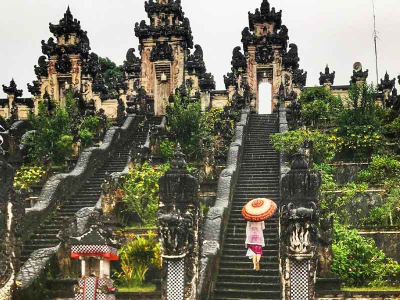
You are not simply standing in front of a beautiful gate. You are visiting a sacred mountain temple with a long religious and cultural history.
Lempuyang and the Journey to the Temple
Another reason Lempuyang feels different from an ordinary sightseeing destination is the journey itself.
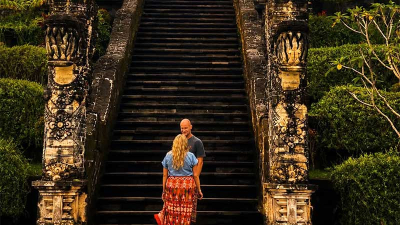
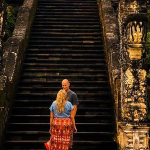
The broader route toward Pura Lempuyang Luhur involves a substantial climb. Official tourism information describes approximately **1,700 steps** to reach the higher temple area, passing through the mountain environment and several temple areas along the way.
However, visitors coming specifically for the famous Gate of Heaven generally visit the lower **Pura Penataran Agung Lempuyang** rather than continuing all the way to the summit.
This distinction is useful when planning your visit because “Lempuyang Temple” can refer to the broader sacred complex, while the famous photograph is associated with the lower temple and its iconic gate.
Read aslo : Lempuyang Temple Bali Dress Code
When Can You See Mount Agung From the Gate?
The famous view depends heavily on weather and visibility.
On a clear morning, Mount Agung can appear prominently between the two sides of the gate.
On cloudy or misty days, however, the mountain may be partially hidden or completely invisible.
This is completely normal.
The mountain is a natural landscape, not a fixed attraction that can be guaranteed to appear every time.
For this reason, an early visit is often preferred by travelers hoping for clearer mountain views. Official tourism information also recommends visiting early, particularly to avoid longer queues around the popular gate.
Why Do People Call It the “Gateway to Heaven”?
There are really two ways to understand the nickname.
The Visual Meaning
From the front, the gate creates a powerful composition.
You have the two vertical structures on either side, the open sky above, and Mount Agung in the center.
It can look like a doorway leading directly toward the heavens.
The Spiritual Context
The second meaning comes from the sacred character of the location.
Lempuyang is an important temple associated with Bali’s religious landscape, and its mountain setting contributes to its spiritual atmosphere.
Therefore, the phrase “Gate of Heaven” works as a tourism description of the visual experience while also reflecting the sacred setting that surrounds the temple.
It should not, however, be understood as the formal religious name of the gate.
What Should Visitors Remember?
If you are planning to visit Lempuyang, remember that this is still an active place of worship.
Dress respectfully and follow the temple’s visitor rules.
A sarong and appropriate temple attire may be required, and visitors should avoid disturbing people who are praying or participating in ceremonies.
When taking photographs, be mindful of the people around you and follow instructions from temple staff.
The beautiful photograph is only one part of the experience.
The cultural and religious environment is what gives the place its character.
More Than Just Bali’s Famous Instagram Gate
So, why is Lempuyang Temple called Gate of Heaven?
The nickname comes primarily from the spectacular view created by the traditional split gate at Pura Penataran Agung Lempuyang, especially when Mount Agung is visible between the two sides.
But the story does not stop with the photograph.
Lempuyang is part of Bali’s sacred mountain and temple landscape, with deep importance in Balinese Hindu tradition. The combination of architecture, mountain scenery, spiritual significance, and the dramatic position of Mount Agung is what makes the location so distinctive.
When you stand between the gates, take a moment to look beyond the camera.
Look toward the mountain.
Look at the temple architecture.
Notice the offerings and the people coming to pray.
Then you will understand that the Gate of Heaven is not simply about getting the perfect Bali photograph, it is about experiencing one of East Bali’s most remarkable sacred landscapes.
See also : How Many Stairs at Lempuyang Temple, A Local Guide’s Honest Answer
Frequently Asked Questions
Why is Lempuyang Temple called the Gate of Heaven?
It is popularly called the Gate of Heaven because the split gate at Pura Penataran Agung Lempuyang frames Mount Agung and the sky, creating the appearance of a gateway toward heaven. The term is a popular tourism nickname rather than the temple’s formal religious name.
Is Gate of Heaven the official name of Lempuyang Temple?
No. The famous gate is associated with Pura Penataran Agung Lempuyang, while Pura Lempuyang Luhur refers to the broader sacred temple complex. “Gate of Heaven” is a popular nickname used in tourism.
Can you always see Mount Agung from Lempuyang?
No. Mount Agung is a natural feature, so visibility depends on weather, clouds, mist, and atmospheric conditions. Clear mornings can provide better chances of seeing the mountain.
Is Lempuyang Temple a sacred temple?
Yes. Pura Lempuyang Luhur is an important Hindu temple in Bali and is included among the Sad Kahyangan Jagat in official tourism information. Visitors should respect the temple’s religious rules and activities.
How many stairs are there at Lempuyang Temple?
The journey to the higher temple area involves approximately 1,700 steps, according to Indonesia’s official tourism information. However, visitors going specifically to the famous Gate of Heaven at Pura Penataran Agung do not necessarily need to climb the entire route to the summit.
Where is the Gate of Heaven in Bali?
The famous Gate of Heaven is at Pura Penataran Agung Lempuyang in Karangasem, East Bali, on the slopes of Mount Lempuyang. Check also lempuyang temple location